Protecting Our Planet: Environmental Science
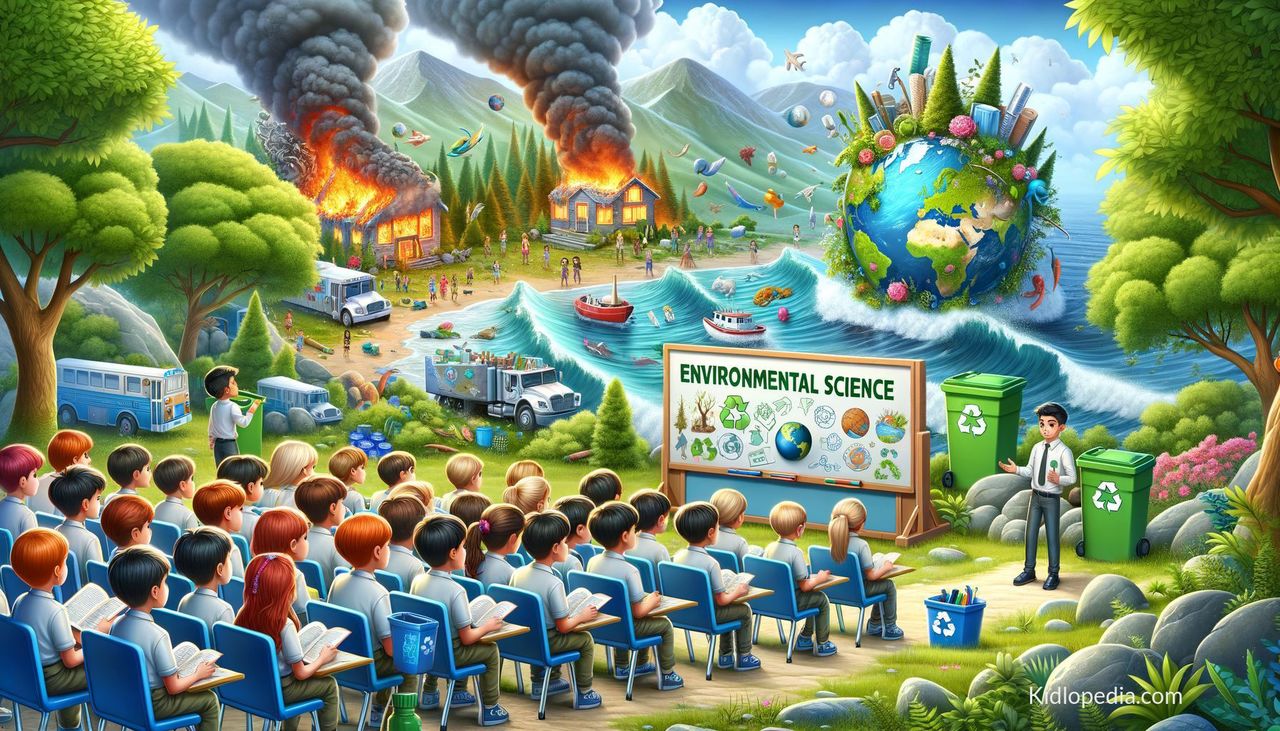
Environmental science is the study of how living things interact with their surroundings, including air, water, and land. It helps us understand the importance of protecting our planet by showing how pollution and waste can harm nature. By learning about recycling and ways to keep our environment clean, we can take actions that help maintain a healthy Earth for all living creatures.
Environmental science is the study of how living things interact with their environment, which includes air, water, and land.
It helps us understand the effects of pollution and waste on nature.
By studying environmental science, we learn how our actions can protect or harm the Earth.
Pollution is when harmful substances contaminate our surroundings.
For example, littering or dumping trash in rivers can make water unsafe for animals and people.
This shows how important it is to keep our air and water clean.
Clean environments are necessary for all living creatures to thrive.
One way to help the planet is through recycling.
Recycling means turning old materials into new products.
For instance, paper, plastic, and metal can be collected and processed to make new items.
When we recycle, we reduce the amount of waste that goes to landfills and lessen pollution.
We can all help by putting trash in the right bins labeled for recycling.
Additionally, learning about reducing waste is crucial.
This means using fewer single-use items like plastic bags and bottles.
Instead, we can use reusable items to minimize the amount of trash we create.
Simple changes, like bringing a reusable water bottle to school, can make a significant difference.
Did you know?
The average person produces about 4.4 pounds of trash every day! Also, about 1 million marine creatures are killed each year due to plastics in our oceans.
By taking steps to protect our planet, we ensure a healthier Earth for everyone.
Explore more exciting topics and learn how you can help at Kidlopedia.com!
It helps us understand the effects of pollution and waste on nature.
By studying environmental science, we learn how our actions can protect or harm the Earth.
Pollution is when harmful substances contaminate our surroundings.
For example, littering or dumping trash in rivers can make water unsafe for animals and people.
This shows how important it is to keep our air and water clean.
Clean environments are necessary for all living creatures to thrive.
One way to help the planet is through recycling.
Recycling means turning old materials into new products.
For instance, paper, plastic, and metal can be collected and processed to make new items.
When we recycle, we reduce the amount of waste that goes to landfills and lessen pollution.
We can all help by putting trash in the right bins labeled for recycling.
Additionally, learning about reducing waste is crucial.
This means using fewer single-use items like plastic bags and bottles.
Instead, we can use reusable items to minimize the amount of trash we create.
Simple changes, like bringing a reusable water bottle to school, can make a significant difference.
Did you know?
The average person produces about 4.4 pounds of trash every day! Also, about 1 million marine creatures are killed each year due to plastics in our oceans.
By taking steps to protect our planet, we ensure a healthier Earth for everyone.
Explore more exciting topics and learn how you can help at Kidlopedia.com!