Self-Replicating Machines: The Von Neumann Probe
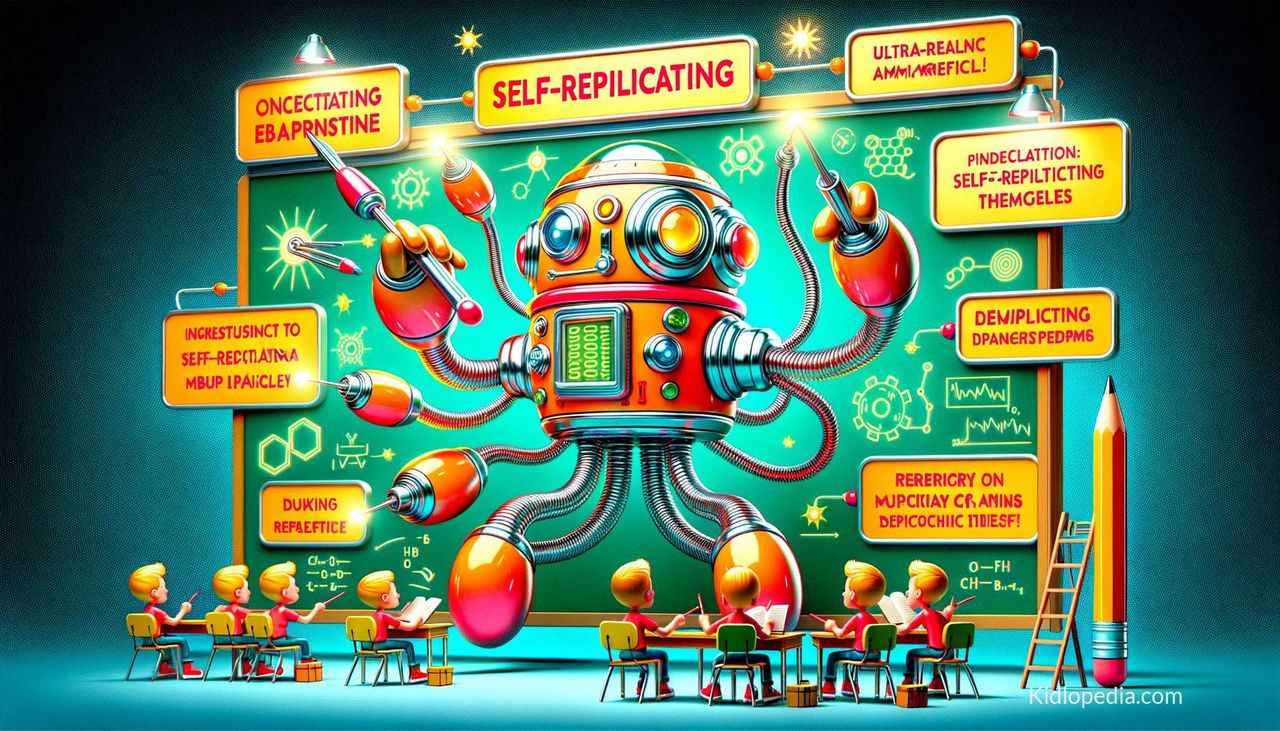
Self-replicating machines are robots that can create copies of themselves using materials from their environment. The Von Neumann Probe is a type of self-replicating robot designed to explore and gather information about other planets. These machines are important because they can cover large areas and learn about new places, helping us understand the universe better.
Self-replicating machines are robots that can create copies of themselves.
They use materials from their surroundings to build these new machines.
This ability allows them to expand, explore, and gather information about different environments effectively.
One example of a self-replicating machine is the Von Neumann Probe.
This type of robot is designed for space exploration.
It can travel to other planets and learn about their features.
When it arrives at a new location, it uses the resources available there to make more copies of itself.
By doing this, the probe can cover larger areas and gather more information than a single robot could manage.
The process begins when a Von Neumann Probe lands on a planet.
It first scans the environment to understand what materials are available.
Then, it uses these materials to replicate itself.
Each new robot can continue exploring and creating additional copies.
This multiplication allows the machines to work as a team, enhancing their ability to collect data and conduct experiments.
Self-replicating machines are important for research and exploration.
They can reach places that are difficult for humans to access.
By sending probes to other planets, we can learn more about the universe without needing to send humans on long journeys.
Did you know that researchers are working on improving self-replicating machines for future space missions?
They hope these robots can help us explore Mars and beyond! Also, self-replicating technology might have uses here on Earth in building materials or in factories.
For more exciting topics, visit Kidlopedia.com!
They use materials from their surroundings to build these new machines.
This ability allows them to expand, explore, and gather information about different environments effectively.
One example of a self-replicating machine is the Von Neumann Probe.
This type of robot is designed for space exploration.
It can travel to other planets and learn about their features.
When it arrives at a new location, it uses the resources available there to make more copies of itself.
By doing this, the probe can cover larger areas and gather more information than a single robot could manage.
The process begins when a Von Neumann Probe lands on a planet.
It first scans the environment to understand what materials are available.
Then, it uses these materials to replicate itself.
Each new robot can continue exploring and creating additional copies.
This multiplication allows the machines to work as a team, enhancing their ability to collect data and conduct experiments.
Self-replicating machines are important for research and exploration.
They can reach places that are difficult for humans to access.
By sending probes to other planets, we can learn more about the universe without needing to send humans on long journeys.
Did you know that researchers are working on improving self-replicating machines for future space missions?
They hope these robots can help us explore Mars and beyond! Also, self-replicating technology might have uses here on Earth in building materials or in factories.
For more exciting topics, visit Kidlopedia.com!