The Universe's Birth: The Big Bang
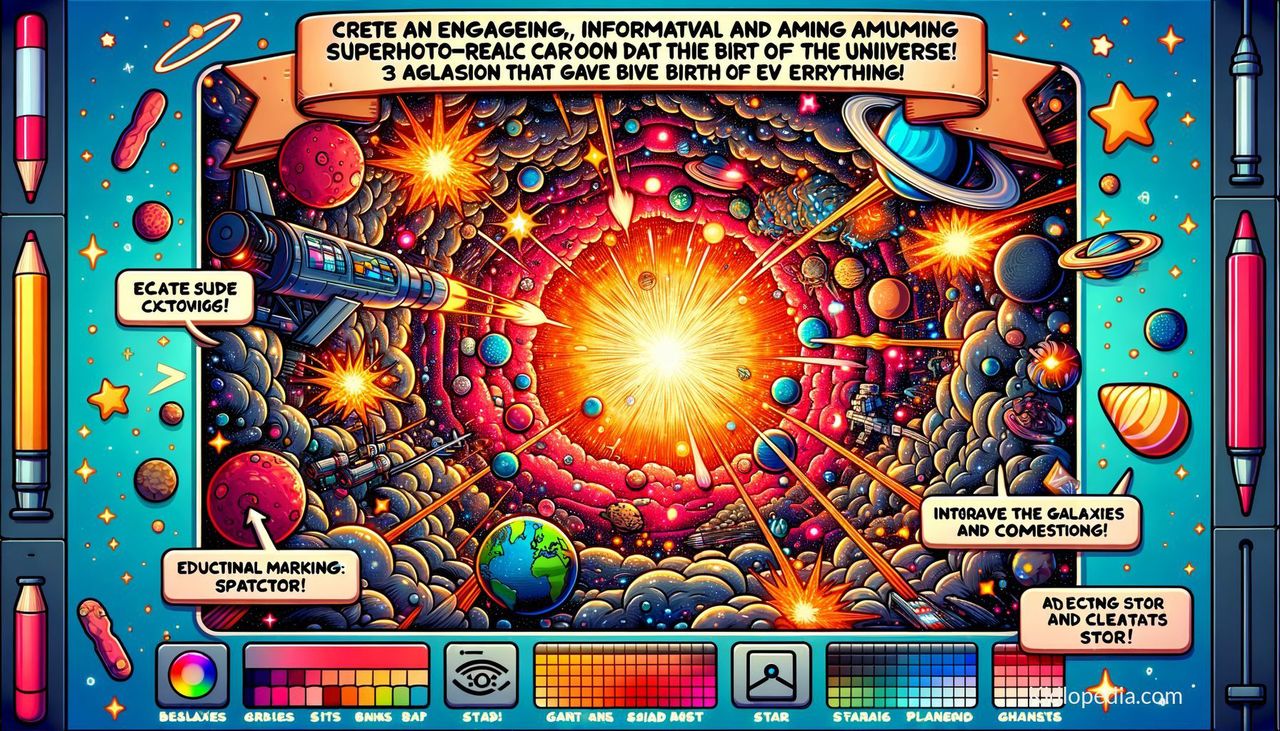
The Big Bang is the moment when the universe began, around 13.8 billion years ago. It started from a tiny, extremely dense point filled with energy that suddenly expanded, creating space, time, and matter. This explosion led to the formation of stars, planets, and everything else that makes up the universe today, making it an essential event in understanding how everything came to be.
The Big Bang is the moment when the universe began, around 13.8 billion years ago.
It started from an incredibly small and dense point filled with energy.
This point was smaller than a grain of sand.
Then, suddenly, it expanded in a huge explosion.
This event is what we call the "Big Bang."
When the Big Bang occurred, it created space, time, and matter all at once.
After the explosion, small particles began to form.
These particles are the building blocks of everything in the universe.
They started to come together, clumping up to create stars, planets, and galaxies.
The universe was rapidly growing and changing.
As time passed, stars began to shine brightly.
Some of these stars formed clouds of gas and dust around them.
Over time, these clouds clumped together too, and eventually, they formed planets, including Earth.
On Earth, conditions were just right for life to begin.
Plants and animals eventually evolved, leading to the world we know today.
The Big Bang is essential for helping us understand how the universe works.
It explains where everything comes from and how it all began.
Every time we look up at the stars, we are seeing the remnants of that very first explosion.
Did you know?
The universe is still expanding today, just like it did after the Big Bang! Scientists study the light from distant galaxies to learn more about the early universe.
For more exciting topics, visit Kidlopedia.com!
It started from an incredibly small and dense point filled with energy.
This point was smaller than a grain of sand.
Then, suddenly, it expanded in a huge explosion.
This event is what we call the "Big Bang."
When the Big Bang occurred, it created space, time, and matter all at once.
After the explosion, small particles began to form.
These particles are the building blocks of everything in the universe.
They started to come together, clumping up to create stars, planets, and galaxies.
The universe was rapidly growing and changing.
As time passed, stars began to shine brightly.
Some of these stars formed clouds of gas and dust around them.
Over time, these clouds clumped together too, and eventually, they formed planets, including Earth.
On Earth, conditions were just right for life to begin.
Plants and animals eventually evolved, leading to the world we know today.
The Big Bang is essential for helping us understand how the universe works.
It explains where everything comes from and how it all began.
Every time we look up at the stars, we are seeing the remnants of that very first explosion.
Did you know?
The universe is still expanding today, just like it did after the Big Bang! Scientists study the light from distant galaxies to learn more about the early universe.
For more exciting topics, visit Kidlopedia.com!