The Wonders of Space: Astronomy
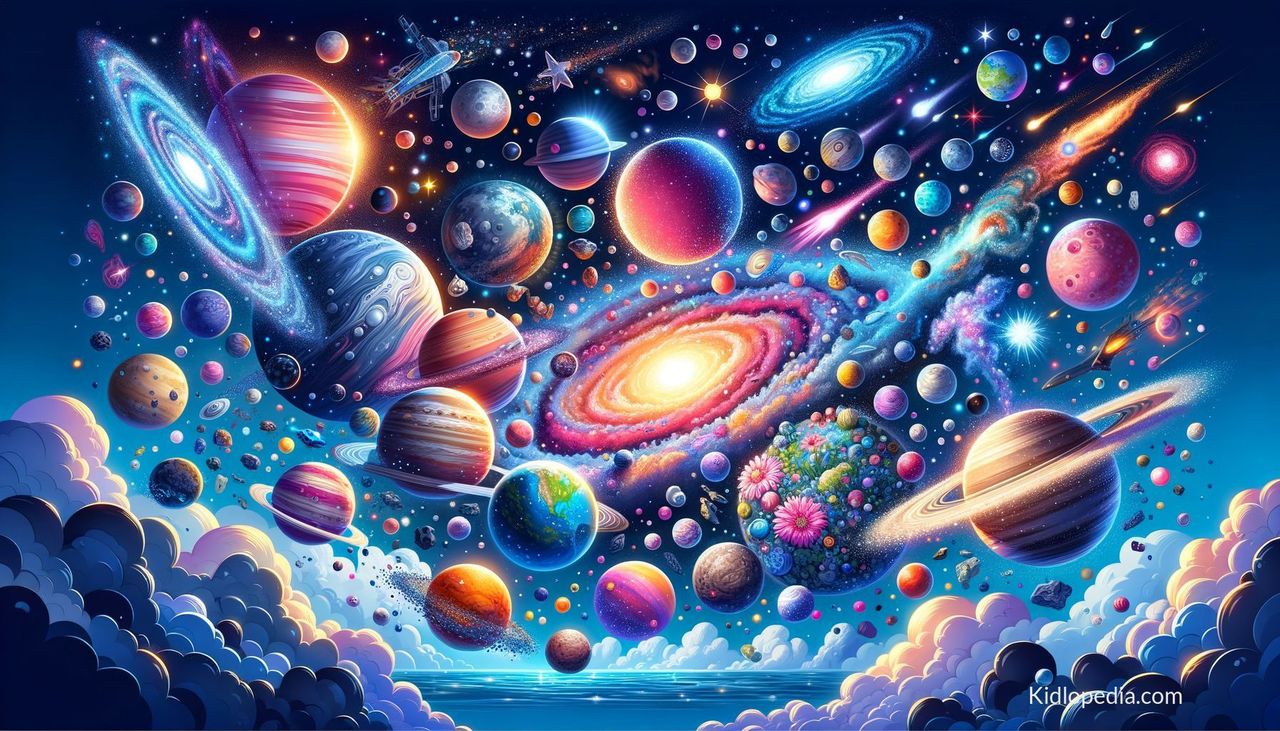
Astronomy is the scientific study of space, including stars, planets, moons, and galaxies. It helps us understand what exists beyond Earth and how these celestial bodies interact with each other. Learning about astronomy is important because it expands our knowledge of the universe and our place within it.
Astronomy is the scientific study of space.
It focuses on celestial bodies like stars, planets, moons, and galaxies.
Astronomers observe these objects to learn more about the universe.
They use telescopes and other tools to see things that are very far away.
Astronomy helps us understand what exists beyond Earth and reveals how these bodies interact with one another.
To study space, astronomers first look up at the night sky.
They catalog the stars, which are huge balls of gas that produce light.
Our Sun is a star, and it is much closer to us than other stars.
Next, they study the planets in our Solar System.
There are eight planets, including Earth, and each one has unique features.
For example, Jupiter is the largest planet, and Saturn has beautiful rings made of ice and rock.
Moons are another important part of astronomy.
Moons orbit planets and can be very different from one another.
For instance, Earth’s Moon is rocky and has craters, while some other moons are covered in ice or may even have volcanoes.
Galaxies, which contain billions of stars and planets, are also studied.
The Milky Way is the galaxy that contains our Solar System.
Astronomy also includes the study of phenomena like meteors and comets.
A meteor is a space rock that burns up when it enters Earth's atmosphere, creating a bright streak in the sky, often called a shooting star.
Comets are icy bodies that develop glowing tails as they get close to the Sun.
Did you know that the universe is about 13.8 billion years old?
Also, the largest known galaxy is called IC 1101, which is about 6 million light-years away!
To learn more about amazing topics like this, visit Kidlopedia.com.
It focuses on celestial bodies like stars, planets, moons, and galaxies.
Astronomers observe these objects to learn more about the universe.
They use telescopes and other tools to see things that are very far away.
Astronomy helps us understand what exists beyond Earth and reveals how these bodies interact with one another.
To study space, astronomers first look up at the night sky.
They catalog the stars, which are huge balls of gas that produce light.
Our Sun is a star, and it is much closer to us than other stars.
Next, they study the planets in our Solar System.
There are eight planets, including Earth, and each one has unique features.
For example, Jupiter is the largest planet, and Saturn has beautiful rings made of ice and rock.
Moons are another important part of astronomy.
Moons orbit planets and can be very different from one another.
For instance, Earth’s Moon is rocky and has craters, while some other moons are covered in ice or may even have volcanoes.
Galaxies, which contain billions of stars and planets, are also studied.
The Milky Way is the galaxy that contains our Solar System.
Astronomy also includes the study of phenomena like meteors and comets.
A meteor is a space rock that burns up when it enters Earth's atmosphere, creating a bright streak in the sky, often called a shooting star.
Comets are icy bodies that develop glowing tails as they get close to the Sun.
Did you know that the universe is about 13.8 billion years old?
Also, the largest known galaxy is called IC 1101, which is about 6 million light-years away!
To learn more about amazing topics like this, visit Kidlopedia.com.