The Sound Shift: The Doppler Effect
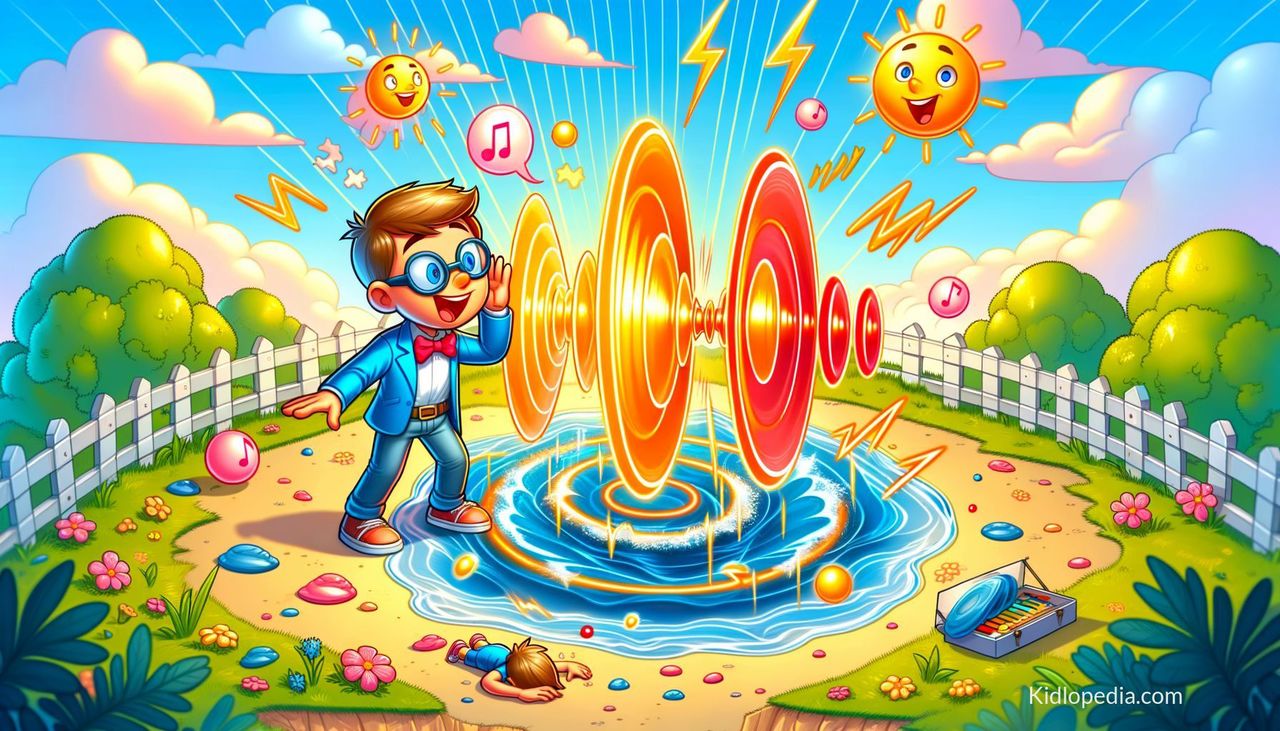
The Doppler Effect is a change in the frequency of a sound when the source of the sound moves closer to or farther away from an observer. When a sound source, like a train, approaches, the sound waves get compressed, making the sound higher in pitch. As the source moves away, the sound waves stretch out, resulting in a lower pitch. This effect is important because it helps us understand how sound travels and changes with movement.
The Doppler Effect is a change in the frequency of a sound when the source of the sound moves closer to or farther away from an observer.
When a sound source, like a train or a car, approaches, the sound waves get compressed.
This makes the sound higher in pitch.
As the source moves away, the sound waves are stretched out, resulting in a lower pitch.
Sound travels in waves.
Imagine tossing a pebble into a pond.
The ripples move outward in circles.
Similarly, when an object makes a sound, it creates sound waves that travel through the air.
When the source of the sound moves towards you, the waves are bunched up, which increases the frequency.
This is why the sound seems to rise in pitch.
On the other hand, when the sound source moves away, the waves are stretched out.
This decreases the frequency, causing the sound to lower in pitch.
You may notice this effect when you hear an ambulance or police car pass by.
As it comes closer, the siren sounds high.
As it drives past and moves away, the siren sounds lower.
The Doppler Effect is not just for trains and cars.
It occurs with any sound source that moves relative to an observer, including animals, airplanes, and even in space with stars.
It is an important concept because it helps scientists understand how sound travels and can be used in technologies like radar and medical imaging.
Did you know?
The Doppler Effect is named after an Austrian physicist named Christian Doppler, who first described it in 1842.
Also, this effect can be observed in light waves, which is important for astronomy!
If you want to learn more interesting topics, visit Kidlopedia.com!
When a sound source, like a train or a car, approaches, the sound waves get compressed.
This makes the sound higher in pitch.
As the source moves away, the sound waves are stretched out, resulting in a lower pitch.
Sound travels in waves.
Imagine tossing a pebble into a pond.
The ripples move outward in circles.
Similarly, when an object makes a sound, it creates sound waves that travel through the air.
When the source of the sound moves towards you, the waves are bunched up, which increases the frequency.
This is why the sound seems to rise in pitch.
On the other hand, when the sound source moves away, the waves are stretched out.
This decreases the frequency, causing the sound to lower in pitch.
You may notice this effect when you hear an ambulance or police car pass by.
As it comes closer, the siren sounds high.
As it drives past and moves away, the siren sounds lower.
The Doppler Effect is not just for trains and cars.
It occurs with any sound source that moves relative to an observer, including animals, airplanes, and even in space with stars.
It is an important concept because it helps scientists understand how sound travels and can be used in technologies like radar and medical imaging.
Did you know?
The Doppler Effect is named after an Austrian physicist named Christian Doppler, who first described it in 1842.
Also, this effect can be observed in light waves, which is important for astronomy!
If you want to learn more interesting topics, visit Kidlopedia.com!