WHAT IS WATER?
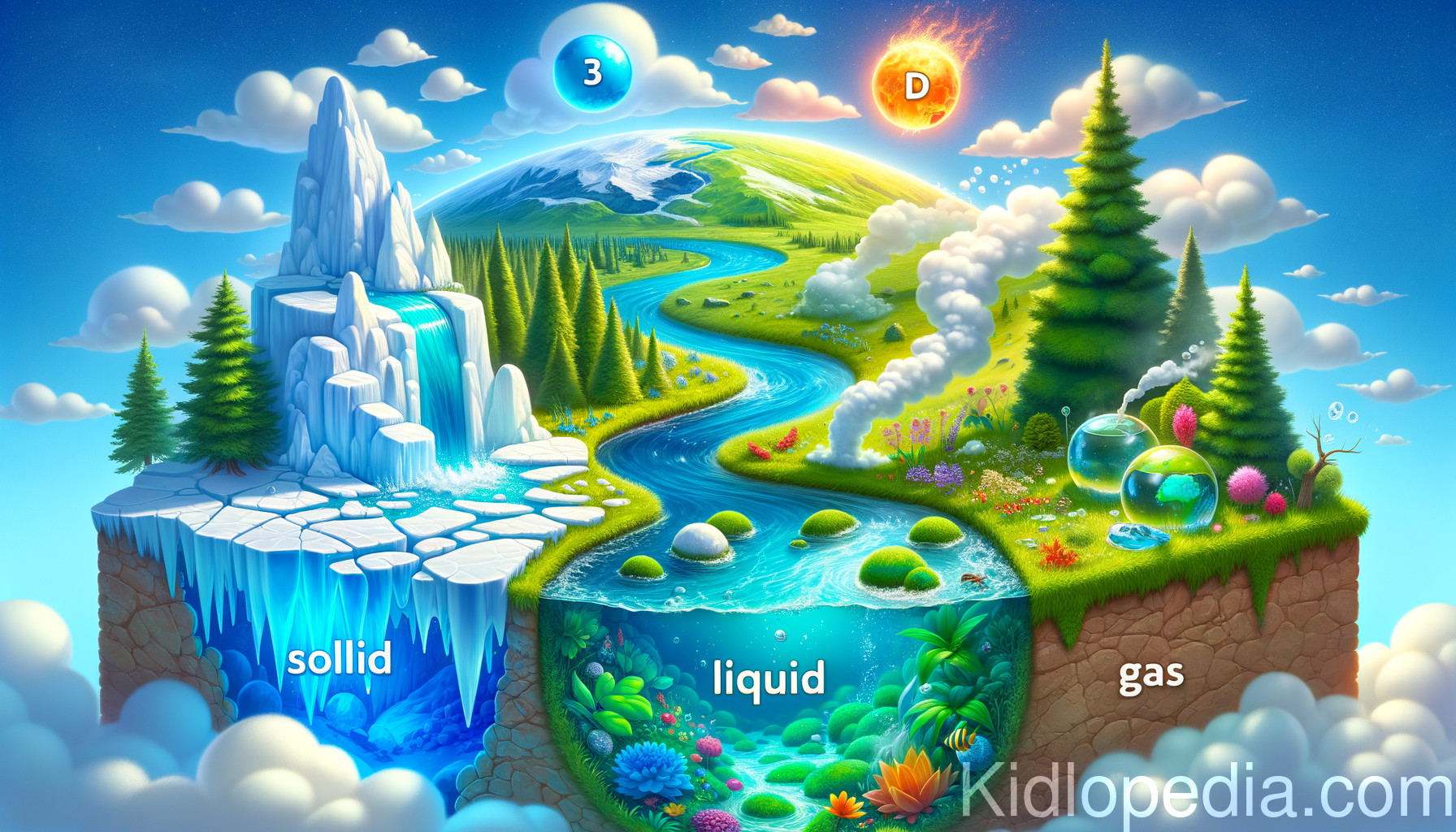
Water is a clear liquid that is essential for all living things to survive. It covers about 71% of Earth's surface and is found in oceans, rivers, lakes, and rain. Water exists in three forms: solid (ice), liquid (water), and gas (steam), and it is vital for the health of people, animals, and plants.
Water is a clear liquid that all living things need to survive.
It is essential for life on Earth.
Water covers about 71% of the Earth's surface.
This includes oceans, rivers, lakes, and even the rainfall that we see.
Without water, living things such as people, animals, and plants could not survive.
Water exists in three states: solid, liquid, and gas.
When water is cold, it turns into ice, which is its solid form.
Ice can be seen in frozen lakes or as ice cubes in your drink.
When water is at room temperature, it is in its liquid form, which is what we drink every day.
When water heats up, it can turn into steam, which is the gas form.
This can be seen when boiling water on the stove.
Water is vital for many reasons.
It helps keep our bodies hydrated.
People need to drink water to stay healthy.
Plants use water to grow and make food through a process called photosynthesis.
Animals also rely on water for drinking and bathing.
In nature, water helps support ecosystems, which are communities of living organisms.
Rain is an important part of the water cycle.
It collects in rivers and lakes and eventually flows back to the oceans.
From there, the sun heats the water, causing it to evaporate and form clouds.
Then, the cycle repeats when the clouds release rain.
This cycle is how water continues to travel around our planet.
Did you know that the human body is made up of about 60% water?
Also, about 97% of the Earth's water is found in the oceans!
To learn more exciting facts, visit Kidlopedia.com.
It is essential for life on Earth.
Water covers about 71% of the Earth's surface.
This includes oceans, rivers, lakes, and even the rainfall that we see.
Without water, living things such as people, animals, and plants could not survive.
Water exists in three states: solid, liquid, and gas.
When water is cold, it turns into ice, which is its solid form.
Ice can be seen in frozen lakes or as ice cubes in your drink.
When water is at room temperature, it is in its liquid form, which is what we drink every day.
When water heats up, it can turn into steam, which is the gas form.
This can be seen when boiling water on the stove.
Water is vital for many reasons.
It helps keep our bodies hydrated.
People need to drink water to stay healthy.
Plants use water to grow and make food through a process called photosynthesis.
Animals also rely on water for drinking and bathing.
In nature, water helps support ecosystems, which are communities of living organisms.
Rain is an important part of the water cycle.
It collects in rivers and lakes and eventually flows back to the oceans.
From there, the sun heats the water, causing it to evaporate and form clouds.
Then, the cycle repeats when the clouds release rain.
This cycle is how water continues to travel around our planet.
Did you know that the human body is made up of about 60% water?
Also, about 97% of the Earth's water is found in the oceans!
To learn more exciting facts, visit Kidlopedia.com.