WHAT IS LIGHT?
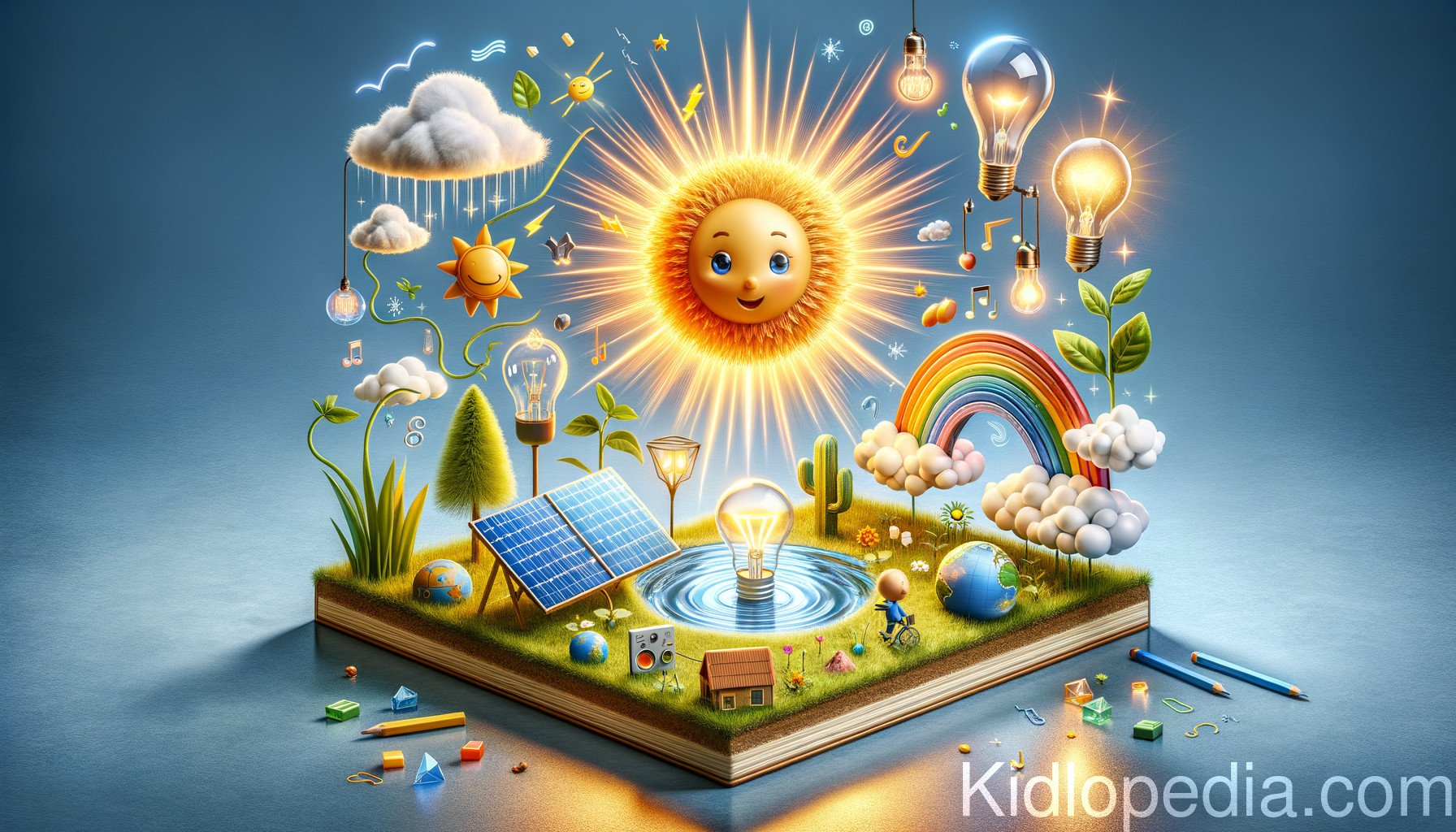
Light is energy that helps us see everything around us. It comes from sources like the sun, fire, and electricity. Light travels in waves, allowing it to be reflected or bent, and it is important for plants to grow and for using solar energy.
Light is energy that lets us see the world.
Without light, our surroundings would be dark and we wouldn't be able to see anything.
Light comes from several sources, including the Sun, fire, and electric bulbs.
Each source provides brightness and helps illuminate our environment.
Light travels in waves.
Imagine throwing a stone into a calm pond; the ripples that spread out are similar to how light waves move through space.
These waves can behave in different ways.
For example, when light hits a mirror, it can bounce back, which we call reflection.
When light passes through a glass prism, it bends and creates a rainbow of colors, a process called refraction.
Light is very important for life on Earth.
Plants need light to grow.
They use a process called photosynthesis to turn sunlight into energy.
This energy helps them make their own food.
In addition, light is key to solar energy.
Solar panels capture sunlight and turn it into electricity that powers homes and schools.
Did you know that light travels faster than anything else in the universe?
It moves at a speed of about 186,282 miles per second! Also, without light, many animals would struggle to find food, as vision helps them spot prey and avoid dangers.
For more interesting topics, visit Kidlopedia.com!
Without light, our surroundings would be dark and we wouldn't be able to see anything.
Light comes from several sources, including the Sun, fire, and electric bulbs.
Each source provides brightness and helps illuminate our environment.
Light travels in waves.
Imagine throwing a stone into a calm pond; the ripples that spread out are similar to how light waves move through space.
These waves can behave in different ways.
For example, when light hits a mirror, it can bounce back, which we call reflection.
When light passes through a glass prism, it bends and creates a rainbow of colors, a process called refraction.
Light is very important for life on Earth.
Plants need light to grow.
They use a process called photosynthesis to turn sunlight into energy.
This energy helps them make their own food.
In addition, light is key to solar energy.
Solar panels capture sunlight and turn it into electricity that powers homes and schools.
Did you know that light travels faster than anything else in the universe?
It moves at a speed of about 186,282 miles per second! Also, without light, many animals would struggle to find food, as vision helps them spot prey and avoid dangers.
For more interesting topics, visit Kidlopedia.com!